Monday, July 31, 2006

Peach-Picking in Brentwood


Fruitful on its 51st year, Moffat Ranch opened their orchard doors to eager peach lovers on July 17, featuring Freestone Peaches: Suncrest, Fay Elberta, O’Henry and Elegant Lady varieties ripe for the pickin’ from July to mid-August.

Jean Moffat runs the ranch with her husband, Walter, and son Jim, and some part-time helpers like Shannon Reid. “I came from Brentwood, Southern California. My husband is a Brentwood native. We bought this orchard in 1952. It had walnuts, peaches, cherries, and apple trees then. We still have young walnut trees but replaced the apples with peaches, as there was no market for apples,” Moffat said. “Today, we have 10 acres of peach, nectarine, and young walnut trees. The peach trees take about 3 years to start bearing fruit and then live a 12-year cycle.”

Moffat ranch started as packers and would ship their fruit to Oakland and San Francisco markets. Trucks would come and take them. This got the neighbors curious, expressing their desire for the ripes. “We were the only ones with U-pick then. Now, there are about 10 within the 1-mile radius. There have been many changes in Brentwood through the years,” observed Moffat.

She recalls last year as sort of a banner year for peaches (“Everyone had beautiful fruit!”) but this year, the rains thwarted pollination and Moffat predicts a short season for Fay Elbertas and Elegant Ladies. Nevertheless, the Suncrest variety yielded a luscious and bountiful harvest, with dense flesh and full flavor. Come and get them at $1.25 a pound. They have had customers from as far as San Francsisco, Pacifica, San Jose, Arizona, and Reno, that go peach-picking themselves or have them picked by the ranch crew.

Customer Pat Morgan from Oakley has been coming to Moffat Ranch for 30 years now. She comes in from the orchard with her bounty of suede-y golden-red skins. “It’s great to be able to drive into the orchard and pick the peaches. I prefer them fresh in season. I take some of them to the senior citizens who can’t pick them anymore,” she said. “Here’s a tip, I was told to pick the big ones because the stone inside is the same size.”

Moffat coaches beginners: “If the fruit comes off easily, it’s ready to eat. Choose based on the deep yellow, not the red part.”

Even kids can come to pick fruit as there are many trees with low branches. My sons love the peaches, specially when they’re overripe. My husband says they taste like “lamog na mangga,” (overripe mangoes).

Thursday, July 27, 2006

Adjusting to a Land of Excess


Here in America, they make it easy for you to want to buy. There are mark-downs almost every week and how can you not buy something that you don't need when the price is so low? I heard of a mother who bought 13 Easter outfits for her toddler because they were on sale --but never got to use them all next Easter. How many Easter outfits can you actually wear? Did she end up saving money on the mark-downs?

Did you see the Oprah episode on Debt Diet? There was a couple with 2 kids making $102,000/year but had a debt of $170,000, $80,000 on their student college loans. They live in a house they cannot afford, have 2 new flashy cars, their celfone bills are $394/month and they spend $100 a day on take-out food because the wife won't cook, maybe because spends $7000/year on her hair!

The average American also has $8,000 in credit card debt.

It's not that I am judging them. It's just with so much, I am hoping to catch some of the money they throw around.

Well, for a family with 5 kids starting in the States, with an income of about $55,000/year, that's a lot to think about because our standards are way lower as $100 (their daily food take-out budget), is my WEEKLY food grocery and cook-in budget for 8! I remain in a constant struggle to balance our budget by living frugally but comfortably and as debt-free as possible.

There are some standards that I won't concede, though, like a decent house (rental)in a good neighborhood where the school system is safe and competent and cars with good AC and will not conk out on me on the highway. I also will not allow my kids to look kawawa (unkempt) or go hungry. Other than that, I am willing to live beneath our means. So flat-screen TV's are way down that list--if only I can get my husband to agree!

Kaya kaya? Count the ways of frugal living with me and who knows what we will find?

I have started a new blog dedicated to my cheap adventures: Frugal Immigrants. See you there!!

our summer garden survives the heat wave


we just survived a heat wave of about 112 degrees over the week! there were power outages in many counties. never thought i would see the day of brown-outs in america! a serious situation where many seniors were hospitalized and many residents were unprepared.

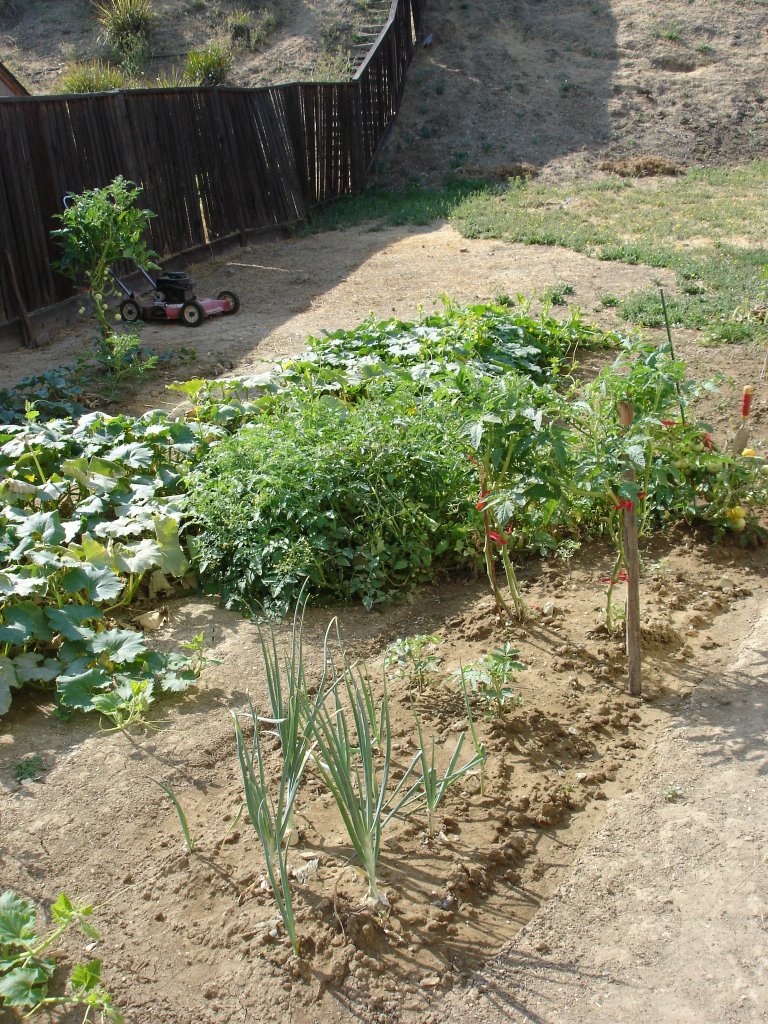
i thought our garden would be scorched but our vegetables seem okay. our garden has been bountiful!

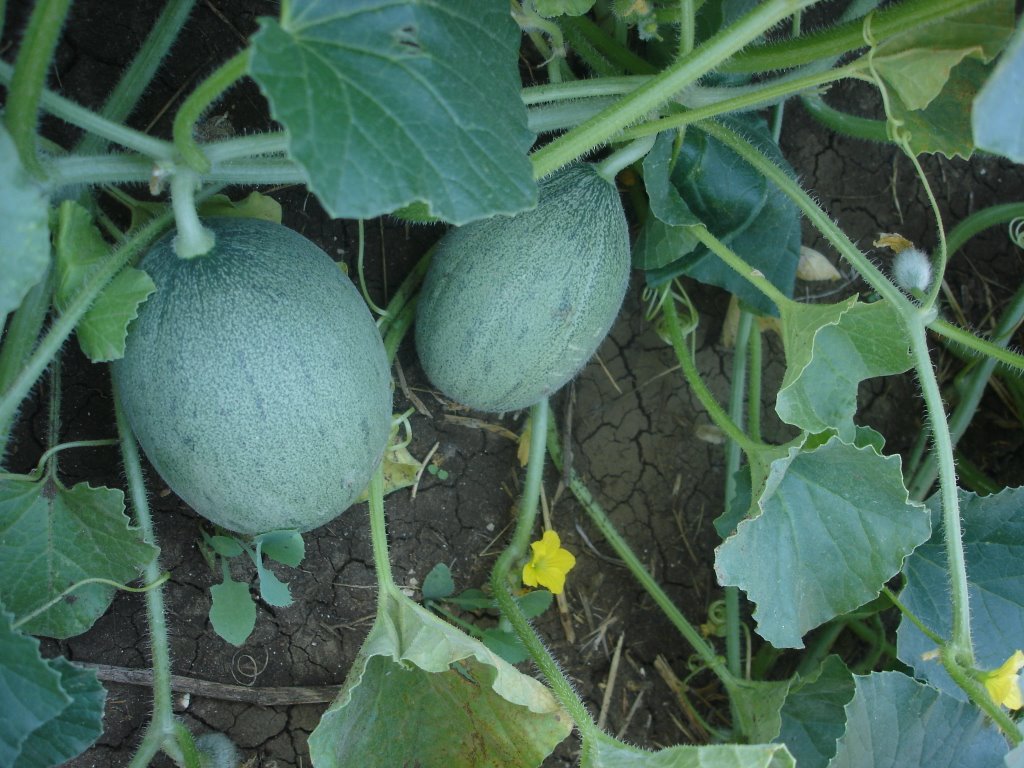
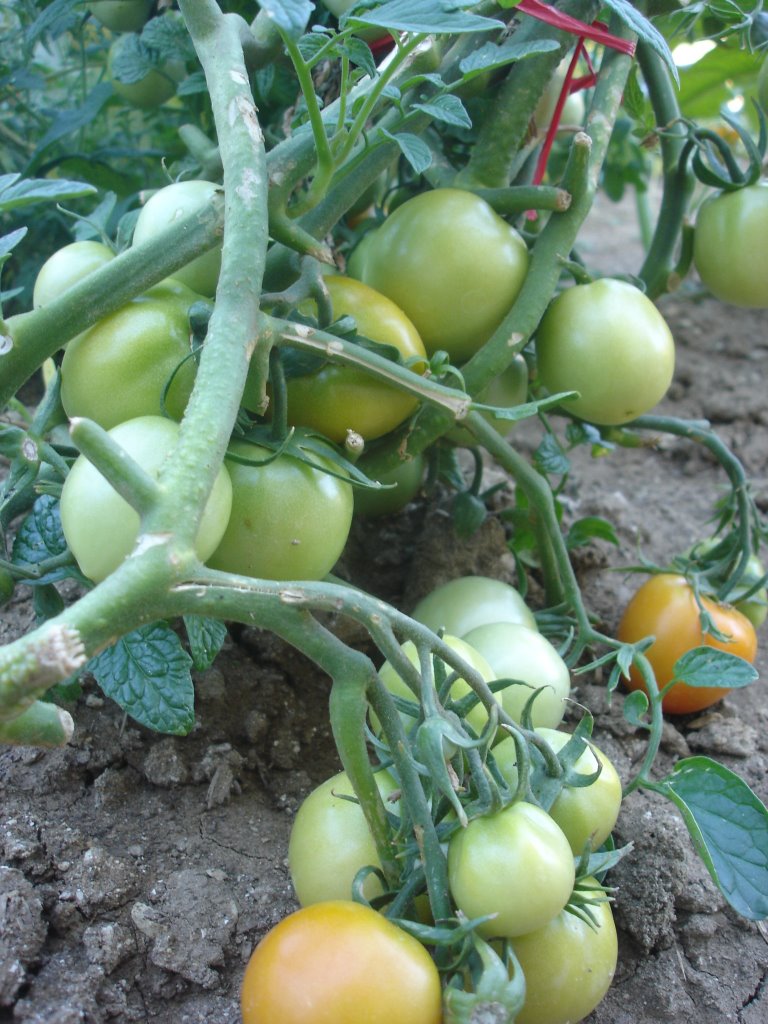
check out our first summer harvest of tomatoes, squash, zucchini, and lately, our baby melons--maybe they are cantaloupes because they just sprouted from the compost (and we thought they were squash!) next in line are red and green bell peppers.

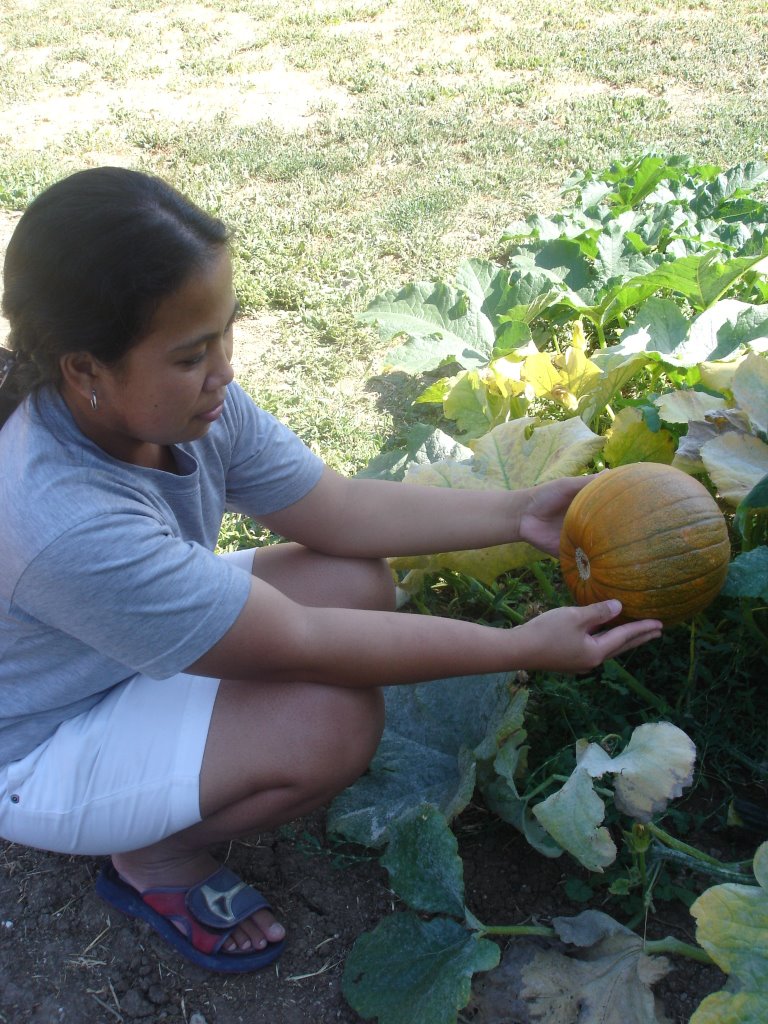
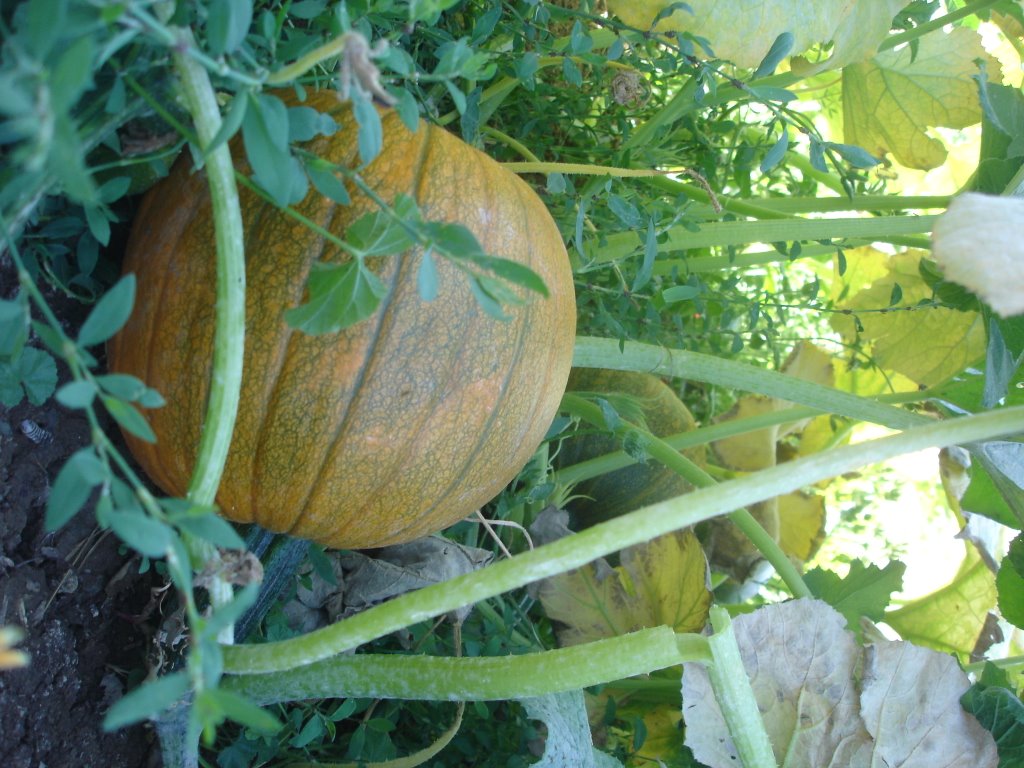
that's syrel with our squash, maybe a pumpkin pala.

Sunday, July 23, 2006

lessons in losing and winning


i have always been competitive. and so it took a long time for me to be a gracious loser. maybe it is in our genes, as i know my dad and his siblings don't like losing, and half of my cousins are sore losers. maybe because a lot has been expected of all of us. thus, since i always try to be diligent and give it my best, LOSING IS SO PAINFUL! when i lose a game, i have to play gracious but i am very upset with myself inside. i can't let it go and i sulk for days.

lately, i realized there are so many valuable lessons in losing. for one, i learned that since losing deflates my inflated ego, i am forced to learn humility--that i am not better than anyone else. nor are they better than me. it's just a matter of consequence, sometimes you win, sometimes you lose. i learned also that there are many factors to winning: practice, spirit, and surrender.

in the last badminton tournaments, i felt ready to win. badminton is a fast-paced game requiring quick reflexes and quick thinking. it's funny how a tournament changes your game. and in the first touney, i was just stunned, plainly reactive, with no strategy. i didn't use what i knew, i just blacked-out! i lost so miserably and couldn't talk for days!

i asked the Lord why i lost when i tried my best. i heard His answer to be something like this: if you play to win, you will be very sad to lose. if you play to do your best and have fun, you will not feel very bad to lose. . .

so i pondered that divine point for many weeks, loosening my grip on wanting to win period. playing a game can be enjoyable and winning may not be the ultimate goal. in a game, i learn more about myself--how far i can push, how ruthless/kind i can be, how bad i feel when i am bullied, thus how compassionate i am towards beginners. i also am beginning to learn strategy and execute the shots i want to do, when i want to, how to share the strategy with my partner, how to cheer him on, how to cooperate. i also learn not to take it out on myself (nor my partner) when we are not of the same skill level because even then, there are lessons to be learned.

in the end, it may not be about winning or competition --but of more evolved values like sharing and cooperation.

this way, defeat means learning and victory is doubled because it is shared.

i want to turn sour grapes into sweet grapes so i will quote GARY ZUKAV author of SEAT OF THE SOUL:

"You lose power whenever your fear. The road to authentic power is always through what you feel, through your heart. Therefore, it is never appropriate to disregard what you feel. . .

Humble spirits are free to love and to be who they are. They have no artificial standards to live up to. They are not drawn to the symbols of external power (i.e: medals). This does not mean that they do not take pride in what they can do well. .

To compete means to strive for something in company or together, to seek after winning something with others. If the something you aim for for is prestige or a gold medals, it is your personality that is motivating the competition. You are striving to empower yourself, to assert your superiority, at the expense of others. You place your sense of self-worth in the hands of others. You have no power even if you win every gold medal the world can produce."


in this most recent tourney, my team lost but i must say, i played one of the best games yet. i am so aware of what i want to do because my focus is not to win but how to play well. i am so aware of my partners--some black-out, too or get angry at themselves, some put effort at working together. but i played a most spectacular game with my parnter, harry. we cheered each other on and kept positive. all we committed to each other was to try our best, and harry stayed in front. WE WON! and i will not forget that game ever.

and so i will continue to practice and keep my spirits positive--only now, i don't measure myself against someone else's standards. i will have to learn how to surrender that maybe winning is destined--depends on when you have earned it. (and only HE can say).

FOR THERE ARE WAY MORE LESSONS TO LEARN IN LOSING THAN IN WINNING.

i am learning that there are many end goals to a game: playing your best, a chance to test your unused personality traits, teamwork, cooperation--all of which are quite enjoyable.

my self-esteem is unhooked from just winning because i refuse to be defined by the game. the old saying "win or lose, it's how you play the game," has become profound.

let's go play!

Wednesday, July 19, 2006

Standing Up for Respect


I came to pick up my newspaper copies in the office. And while I was sitting in the waiting room, scanning the papers for my articles, a Caucasian man, maybe in his sixies, came out from the editorial offices and introduced himself, “Hi, I’m Harry Stoll. And you are. . ?

“Hi, I’m Minotte,” I said, standing up.

“Oh, don’t stand up for me. You’re a lady!” Harry said, amused. He went on and told me stories about his Filipino-Chinese son-in-law, touching on his own European heritage. He shared with me with fond stories of his part Filipino grandson who is quite close to him.

I was awkward because I didn’t give my standing up to shake his hand any thought.

We met again at the car service shop. And when he approached me, I stood up again to say hello.

“You stand up because of my age, right?” Harry said, quite puzzled at how slow I am to unlearn my behavior.

So now I will examine my standing up to meet people and why they insist that I don't.

In the Philippines, where I come from, where families are extended, and where I grew up with my grandparents--we are taught to stand up to show respect--for elders, for superiors, for priests, or when you are in someone else's house. In the really olden days, we were taught to stand up for foreigners. Today, men still stand up for women but this is mostly superceded by the age of the man. If he is older, the younger woman may show respect by standing up to greet him. For parents and revered grandparents, it is customary for the (grand)children to take their hand to the forehead and receive a blessing from them. And no one ever talks back to older people, not even when they are wrong.

Here in America, where everyone is a "foreigner," where you can call your father/mother-in law by first names, where equality of opportunity is emphasized, man, woman, young, old, disabled, abled--everyone has the same chance and I guess, the same treatment. I mean, if the disabled woman beside you can take your job as manager, then you will assume that she has had the same educational and intellectual talents, so why give her your seat in the bus if she won't give her yours?

Also, here in this first-world, modern and equal country, everyone is on a first-name basis. I had to stop myself from calling my editor (and therefore my boss) Mr. Lemyre so many times as I couldn't bring myself to call him just Rick. But I had to, lest he think of me as trying to create a caste system in the office.

In Manila, everyone above 30 is called Ma'm/Sir at one point or another, be it at work or in fast-food joints as customers. Age supercedes even social class. It is common for wealthier people to call their elderly household staff/drivers as "Mang" or "Manang" (Mr. or Mrs.) something, versus just by their first names. Even older siblings are called "kuya" or "ate" and friends of your parents are called uncles and aunts.

My son's playmate, Jackie, calls me "Magu's mom" because he couldn't pronounce Mrs. Cuenca. When Magu also attended his classmate's birthday party at their place, his classmate's father told everyone to call him by his first name while he was handing out nametags. My poor son called him tito (uncle) so-and-so, out of habit. Later, he realized it was not the same as the Filipino custom of calling everyone uncle and auntie so-and-so even if they weren't relatives. I told him, he could call him Mr. Smith, if he is not comfortable calling him by his first name--which kind of connotes disrespect for our culture.

It may be an uphill battle, but I would like to try to keep this endearing custom alive in my children. I certainly will not accept their not standing up to greet us (their parents) with a kiss when we come in. I have taught them to do this when they were all little. I explain to them the reverence standing up and in calling the older people by Mr. so-and-so--that it is formal and respectful because age gives them a certain level that younger ones must acknowledge.

Shivers that my kids will grow up like many American teens here--as they zip by without acknowledging their parents, talking back at them, cursing infront of them, blaring loud music in their rooms or cars.

Believe it or not, "Just because I said so" still prevails for Filipino parents and their children. We use many old-fashioned parenting tactics and sometimes it is innate that we manipulate them into thinking that putting old parents into a nursing home is a sin because they have to take care of us when we get old. That is because we provide our young with love and support way after they are 18. And to instill discipline, we still spank them into place, and they cannot talk back to us, even if they know they can call 9-1-1.

This is our culture--pros and cons included. Although I will be careful about the manipulative part, I will retain the endearing part of respect and love of family and elders as my kids grow up here in America. My boys are taught to give up their seats in the BART to women and the elderly. Their tall and strong bodies are trained not to let me carry all the grocery packages. My daughters should dress appropriately at all times. They also cannot make a mess or be noisy or sit in the couch with legs wide open in other people's homes. And they certainly must stand up when the homeowner arrives.

And maybe the whole point is beyond culture. I don't want to unlearn respect and reverence for those that have come before me. Harry will tease me but I will continue to stand up when I see him. I don't want to unlearn propriety and I am not stiffened by it. I respect people not for politics, money or power. I show respect to people, not just the elderly, so that they may feel good about themselves--because they are the highest link in this chain we call life.

I guess that is what respect is--an offshoot of humility, kindness and compassion, a reverence for people and the awesome beauty of God's creations. If only we had endearing terms and customs for that, too.

And though everyone may be equal, everyone deserves a little respect--and standing up to show it can't hurt now, can it?

Friday, July 14, 2006

training your husband?


My husband forwarded an amusing article by Amy Sutherland for the New York Post called "WHAT SHAMU TAUGHT ME ABOUT A HAPPY MARRIAGE." Because it seemed like he was dropping a big hint, I read it and considered its wisdom.

Sutherland was writing about a school for exotic animal trainers, watching students do the seemingly impossible: teaching hyenas to pirouette on command, cougars to offer their paws for a nail clipping, and baboons to skateboard.

"The central lesson I learned from exotic animal trainers is that I should reward behavior I like and ignore behavior I don't. After all, you don't get a sea lion to balance a ball on the end of its nose by nagging. The same goes for the American husband," Sutherland said.

She ignored her husbands tantrums or his litter of wet towels and gave him a kiss when he threw his dirty clothes in the hamper.

Let's all read it and learn. I think the author meant this training for small and petty behavior. Those deep-seated issues might not respond to training. Just thinking of ignoring my hubby's annoying behavior already makes me tense. If you decide to train your husband (or wife!), let me know how it went.

Meantime, I will crack my dead-ma whip. . .

Monday, July 10, 2006

counting our blessings


when you come from the philippines, the grocery in USA is like disneyland. the chicken and eggs are super big, the meats are clean and lean, there are butter subtitutes that taste like butter and double-churned fat-free, sugar-free ice cream that tastes like regular. even filipino food here tastes better. plus, food is cheap, specially chicken. thus, i have about 40 chicken recipes to counter, "chicken again?"

i count chicken as a blessing because in the philippines, it could be noodles for many.

in counting my blessings, i realized perspective, not actuality, is the key. for in manila, native chicken can be "free range," after eating good filipino food, someone washes the dishes, and we miss ube and mango ice cream flavors.

my friend challenged me to be grateful for 10 things a day. easy at first, but i had to come up with new ones (without repeating) every day. i find that this attitude is exciting because there are actually new blessings everytime.

my biggest blessings may very well be my biggest challenge--my kids, all 5 of them. i am thankful that i get the chance not just to parent them, but to parent them the best way i can. i am blessed that we are all together, starting a new chapter in our lives. i marvel at how they trusted our decision as a family and how they rise to the occasion of migrating, adjusting and feeling their way around here.

to see them grow into fine young men is exhilirating to me as i slowly learn that they have their own personalities that they are trying to exert. that i helped them carve themselves is more satifying than looking at my printed by-line in the paper. i have to hurry up and work on accepting that one of them has a foot out the door--and i must not weigh him down as he spreads his wings.

to know them by the smell of their hair--one smells milky, the other one like flowers, the other one a bit earthy; the older ones almost manly with the faint smell of handsome deodorant only discernable when i ask for a hug.

to watch my youngest one as she naps, i memorized the color of her milky skin and spy
that she has baby hair on her back, so i will remember her exactly this way when i am looking out the window from my rocking chair. . .

that my husband is a good soul, and that he is healthy is the B in my blessings. that we both get to play badminton is a privilege. i look forward to many adventures with him when we are 50. meantime, i am glad that i made this move with him.

that we are closer as a family because we have to depend on each other is precious. we like staying home and hanging out. the boys clean the cars and mow the grass in the week-ends. the little girls play house with the balikbayan box. we started a small tradition of brunch day on saturdays--french toast, bacon, and rice. i am sure we will look back at this experience fondly one day.

that i can work from home and watch all of this happen--what a gift!i have taken care not be sucked into the american rat race, and cared more about just being than being something. that our garden blesses us with organic vegetables and lends me peace of mind is amazing. that we have TFC (the filipino channel) so we can watch wowowee and the pinoy soaps, for phone cards (14 cents/min) to call my dad and my lola, and the internet that makes keeping in touch way easier, and this blog. . . how did we live without these in the 80's?

that we are nursing new friendships with generous souls who like to help us out. it's wonderful that when you ask for assistance, the Lord leads you towards what you need, and the exact people/signs/books that can help you. bookstores have been a lifeline for me here because they are so huge and varied, they have comforted me in many ways.

that i get to know my mom more and that she is doing so well after her kidney transplant. that my brothers and i are in touch and actually miss each other.

to yaya syrel--because without her, this would not have been possible. it's a running joke when i told ricky, umuwi na siya huwag lang si yaya syrel. but it's not a joke that without yaya syrel, my perspective would shift widly!

how funny that inspite of a tight budget in the USA, i am surprised that my perspective of our blessings have nothing to do with material stuff, nor location. so maybe we are on the right track. . .

watch out for midlife, she can be a temptress, prompting one to ask, "is there all there is?"

what is your biggest blessing?

Friday, July 07, 2006

the reluctant immigrant--starting poor in USA?


starting off bare in the USA has been quite challenging, with many adjustments. i remember thinking, we were better off when we came here as tourists. but last year as permanent residents, we couldn't buy anything or go anywhere without a financial plan. (i.e how are we going to pay for that?) i bought only in walmart and costco and everywhere else where the prices were lower,(like salvation army and goodwill--but don't tell my mom!) considering there were 5 kids to feed and clothe. i did not enter macy's or any mall. we did not eat out. and i found myself nervously holding my kids back to "one treat each!" at the dollar store. one dollar na nga nalang, nervous pa ako!

but the real test of how poor you are in the states is what my brother, miguel, calls the mcdonald's price index. i had gone without breakfast, in the field at 2 p.m. and i was hesitating to buy a dollar double-cheeseburger. one dollar na nga nalang, pinag-isipan ko pa!

i guess, if you have no money to buy mcdo, the index says you are poor. . .

i burst into tears to my husband when i my kids asked to go to mcdo and i said maybe next week--not because there was no time, but because the budget was too tight. and i whined about the fact that at least, in manila, we were not that poor to not be able to buy mcdo for lunch.

with our family's income just above poverty,there were times the monthly budget just would not fit (and none of my articles were published) and we had to dig into our savings which was difficult for me as those dollars were converted 54 times from pesos. that's one big stage of migrating--converting. it was always times 54 to the dollar. thus, everything was expensive because if you can get a kiddie shirt for P75 pesos in megamall, you will have to think about $5dollars for a tshirt in Kmart, because of course, i would have to buy 5 tshirts at a time for my 5 kids.

we watched movies rarely and only during matinee ($6.50 vs regular after 6 p.m. $9, versus P120 in the philippines--stop converting!) and none of the kids could buy the enticing butter popcorn/nachos combo for $5 dollars that make watching complete because we packed a backpack-full of snacks, sandwiches, and drinks even if it was discouraged and wa-poise, and saved maybe $20 dollars at a time.

i had to get up and dust myself when i couldn't buy the kids shoes at the same time. although no one else noticed, i saw them in the school playground with worn out shoes, compared to their classmates. one pair for one child every month was allowed by the all-ruling budget. and i cried when my husband was late to pay his credit card because they put on a finance charge of $15. when you pinch a dollar for lunch, you will cry for $15 down the drain. (which also equalled 1 pair of shoes for some one).

my generous husband, ricky, pegged food expense at $150/week and i thought, "wow, that's a lot of food!" but the budget couldn't support it so i reduced it to $100/week, and then to $80/week (for 8 people!)--when $40/day for 1 person is considered frugal--there's even a show for it in HGTV. so let me tell you, $80/week for 8 people to budget our food is phenomenal. and if it's kulang, i ask my husband to stop eating and remind him he's on a diet.

this is the first time, kabado ako sa pagbili ng school supplies, ng pambaon, books, christmas and birthday presents. and my heart breaks when my kids want a new toy and i have to keep stalling month after month. birthdays are special--because you get the ONE toy you like, and i get to bake a flat chocolate cake with sprinkles on top.

i thought, "is this the better life we left manila for? i can't seem to see the land of opportunity as just that--yet.

i have been poor before, worked from paycheck to paycheck--but it's so hard with the kids. and so hard at this age.

lest i look like a whiny brat, i count my blessings and realize how lucky we are. i pay tribute to all who have gone before us. i remember my cousin who started out with no status, scrubbing mcdo's toilets. or my cousin who kept 2 jobs--counting candy as inventory at midnight, and then running off to his second job on a bicycle. starting out poor in the USA can really make you sob. my friend ate once a day because he would not buy lunch at work and his wife had to tend to a newborn. my cousins had to sleep in used mattresses. and many friends had to live with a relative to get by. my aunt worked as candy-striper (nurse's aide) at the hospital, on the graveyard shift, and my uncle sold life insurance, while folding the laundry. (he later became consul-general of new york--yey!)

i also think of the ones who buy $400 for a purse (because it had to be green and on sale), and the many who throw away untouched, perfectly good food--should i pick it up and bring it home, like the give-away furniture at the curb, or crayons, supplies, books? i am amazed at how almost everything at home we bought from a garage sale--but how beautiful they become after some paint and stencil.

many have said, "maawa ka muna sa sarili mo." and i think we have just passed that stage of migrating. it's true, and it's not so bad--because lately, things have started to look better already. i feel so blessed for hurdling the first stage. we may be poor but we are remarkably blessed and actually quite happy.

ricky's birthday marks our first year in the states. i got to make him a semi-homemade strawberry shortcake. nico gave him a car magazine, magu gave him a back-scratcher, selena gave him a night-light with jesus and mary on it, syrel gave him a rosary, and monica gave him a box of junior mints. (all from the dollar store!)

i have never seen him more touched.

(next: counting our blessings in the USA)

Friday, June 30, 2006

a wonderful vegetable compost garden harvest


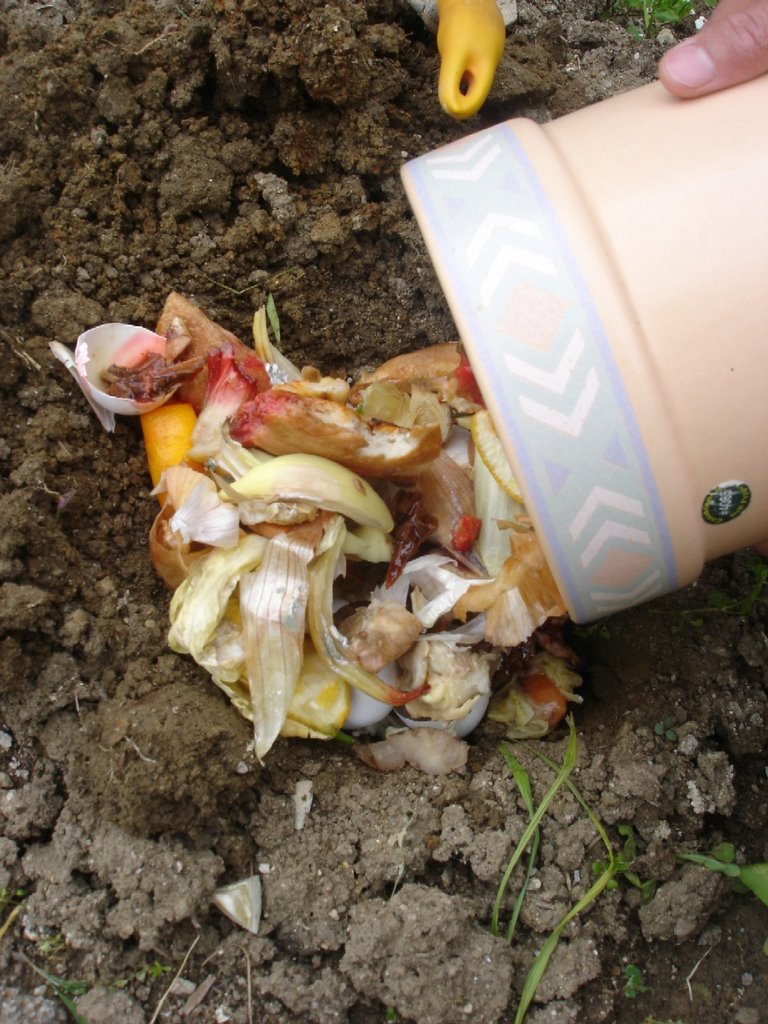
there is this deep peace in tending a garden, and great fulfillment in watching it bear fruit--well, vegetables in my case. i am not known to have a green thumb. i successfully grew a cactus plant and some chili in manila. but i'd like to think i am a staunch practitioner of composting food scraps--burying them back into the earth to enrich the soil, and to save much needed landfill space.

here in my spacious backyard, syrel and i have sprouted tomatoes, zucchini, squash, oregano, thyme, big, fat spinach leaves (as big as dinner plates!)--organic, i must proudly add as nothing came close to those plants except love and care and a lot of kitchen scraps; and delightful, as i must declare our blessings.

and not only has the earth sprouted these delights, but in abundance--it is so amazing! i have had to give away some giant spinach and some giant zucchini to friends who can't believe i used no fertilizer nor pesticides. well, the spinach did have some holes in them, thanks to the ever-tenacious slugs. we have learned a couple of tricks to detract them like putting coffee grinds or a bowl of beer around the plants.

and the taste and texture of this fruit of the land? sweet and tender, unlike anything i have bought from the hi-tech grocery stores here. when you eat your tomatoes as you pick them, i don't think you will ever buy them in a store again. my friend noel and i, have raved about growing his salad greens and some herbs in his city pocket garden. it's just great to eat the fruits of your labor!

mother earth gave me not only an extraordinary harvest but also led me into a circle of organic gardeners. i met julie haas-wajdowicz and marisa neelon who lead a monthly meeting for similar souls, looking to revere the soil by respecting it. marisa runs a community organic garden. she grows the sweetest red onions. julie does worm composting workshops that are gaining popularity. feed the worms food scraps and their poop makes for excellent organic fertilizer, free and non-chemical.

and then i came across terracycle--producers of liquid worm castings as organic fertilizer, bottled in recycled soda-pop plastic bottles, packed in discarded/misprinted boxes, founded by 23-year old princeton drop out and eco-capitalist tom szacky, based in new jersey, expecting $2.5 million in sales this year. inspired by a box of worms, these students had a dream: a company could be financially successful while being ecologically and socially responsible.

how wonderful that the consciousness towards the environment and economics is evolving. i join terracycle in their dream when renewable goals are shared by all enterprises, all working to "Grow a Better World."

check them out at terracycle

Saturday, June 24, 2006

global volunteers


I read an interesting article about travel volunteers. Many people travel to unwind. some people, like Rev. Sharon Brostrom, prefer to serve. Showing off her pictures taken while she volunteered in an orphanage in India, she was already planning her next trip to Romania "to take care of babies."

Brostrom plans her trips through a very special kind of travel agency -- Global Volunteers. In the past five years, she has visited orphanages in developing countries such as India, built houses in Ecuador and worked on a tree farm in Australia. She has stayed in Poland and most recently taught English in Crete.

Many other volunteers attest that volunteering is a more in-depth way of getting to know the host country, its culture and people. Learn first-hand about your host community's culture and history while serving as a valuable resource to children and adults. At the same time, you wage peace and gain new perspectives of the world in one, two or three weeks.

Founded by Michele and Bud Philbrook in 1979, as they were in search of a more balanced honeymoon in the context of world events. The couple realized how limited the opportunities for church and volunteer groups were. Later, they were given permission to visit and live in a small and poor village in Conacaste, Guatemala--where they outlined the village's needs for basic amenities like clean water, better dwellings, electricity, and mentor their sparse industries like bread-making and basket-weaving.

Using their background in Foreign Relations and Journalism, the couple soon composed and won grants and volunteer services to help Conacaste become more self-sufficient.

Today, Global Volunteers exists to enable local people to enlist others' support and practical skills to visualize and achieve their community hopes and dreams. As a non-governmental organization (NGO) in special consultative status with the United Nations, Global Volunteers mobilizes some 150 service-learning teams year-around to work in 20 countries on six continents, and is the internationally recognized leader in this field of work.

You can sign up as a travel volunteer in any of these areas: (Oh, yeah, you will have to foot your ticket cost).

1. Child Care-- You can care for physically- and mentally-disabled children, some who have been abandoned, and "at-risk" teens. Often no special skills are required, as volunteers are needed to listen to, play, read, exercise and share time with the children.

2. Teaching English--You don't have to know the language of the host country. Often teaching is done through simple conversation along with a local teacher in school classrooms or at intensive summer camps where lessons take place in a variety of non-traditional settings.

3. Health Care-- Health care professionals of various specialties, particularly those with public health backgrounds, are needed at small village clinics. The working conditions may not be what you are used to - the equipment is quite basic and the amount and variety of medicines are really limited. So if you are a doctor, dentist, or nurse, bring your enthusiasm to serve, and your own equipment.

4. Labor Projects--Assist with building, repairing and painting facilities such as community centers, classrooms, librairies, medical clinics, and houses. You can also help clear park land, plant community gardens, dig wells, construct clean water systems, install playground equipment and more. No specific construction skills are needed.

Volunteer Marilyn Lutzker has this to say about her China stint, teaching English: "Not knowing Chinese is not an obstacle to exploring and enjoying Xian. Global Volunteers provides a fail-safe Chinese-English list of key words and major sites. Body language, pointing, smiling, and the patience and good humor of the Chinese people take care of the rest. Trying to buy a pair of pants in a department store, when "mas grande" didn't work I pointed to my more-than-ample hips; the clerk laughed and found a larger size. In a noodle shop without an English menu, I pointed to items being eaten by other patrons. Shaking the empty thermos told the hotel staff we needed more hot water; the motion which finally communicated more toilet paper need not be repeated.

Each of my teaching experiences was distinct and each was rewarding. But the lessons I learned in one country - about myself, about teaching, about interacting with students, about being part of a team - helped me in the other countries. Similarities outnumber differences. The host teachers --so happy to have you-are appreciative, warm and supportive, team members constantly help and praise each other, and the students love you."

Check them out at Global Vounteers

Friday, June 23, 2006

when life gives you lemons


a TV show not so long ago continues to inspire me. "the new heroes" aired in PBS last year featuring 14 people from around the world, the social enterpreneurs--that developed their businesses around solutions and resources to the very needy communities they were in.

albina ruiz found a way to address the inefficient garbage collection in peru. there was even a marketplace that had no garbage collection at all. unhealthy garbage festered. she gave the people in that community livelihood by empowering them to collect garbage more efficiently and environmentally safer than the government. now, the people prefer ruiz's services than peru's.

maria teresa leal founded a sewing coop for the very poor women in brazil to work from home and take care of their kids at the same time--recycling scraps of cloth into fashionable quilted fabric with knit and crochet (my favorite hobby!) accessories for designer fashion, now exported to europe.

muhammed yunus set up his grameen bank amidst the slums of bangladesh, providing micro-business with loans without collateral to the poorest women. grameen bank has been acknowledged as the single most important development in third world countries in 100 years.

i hope you can check out the site and meet the other 11 of my new heroes, not of wars or weapons, but of creative ideas and determination to change the world. maybe they will inspire you towards something greater, too! everyone has been made for some particular work and the desire for that work has been put into her heart. and aristotle said that "where your talents and the needs of the world cross, there lies your vocation."

so when life gives us garbage, we must segregate it. when life gives us cloth scraps, we should make a quilt.

how shall we change our world today?

click on the new heroes

Thursday, June 22, 2006


Considering the harm others do to you
As created by your former deeds, do not anger.
Act such that further suffering will not be created
And your own faults will disappear.

-Nagarjuna, "Precious Garland"

From "365 Buddha: Daily Meditations," edited by Jeff Schmidt. Reprinted by arrangement with Tarcher/Putnam, a division of Penguin Putnam Inc.

Sunday, June 18, 2006

can you fix it?


my daughter was playing with Leggo toys. she carefully built something piece by piece. when she finished she was so excited, she ran to show me her new masterpiece. but she lifted the toy up too fast and some parts of it came off and shattered to the floor.

she looked very worried. "can you fix it?" she asked.

i was busy, on a deadline. but then i went to her and we picked up the pieces, one by one. we put them together and restored her toy. she was smiling now, with a confidence that was infectious.

and then i realized, that my purpose may not be grand. rather, it can be the simplest thing--to help, to heal, to teach, to nurture--to make it a better place for someone else--and i must not miss even the smallest opportunities to make it so.

Friday, June 16, 2006

baby girl X


when i first saw her, she was on TV. she was abandoned and fighting for her life. encased in a glass incubator, she was thin gray, with at least half a dozen needles and monitors stuck into her dry and old skin.

i rushed to PGH and brought the antibiotics the public-service program said she needed, along with disposable diapers, a knitted cap, a soft toy, fuzzy blankets, and a stampita of the divine mercy. i peered into the most complicated incubator in the room, and there she lay, even more premature and smaller than i thought, weighing 950 grams, less than 1 kilo of porkchops.

baby girl X--it said on the incubator. and for some reason, she looked like my grandmother, mama maying, we used to call her, which was a baby's way of saying maring, a nickname for maria.

many people ask me when i decided to adopt my daughter. although i may have not known it yet, it was probably at that moment when i was astonished that baby girl X looked so much like my mama maying. for signs like these may seem coincidental to you but incredibly meaningful to me.

baby girl X did fight for her life, hard. through infections and roller-coaster sepsis levels and immature lungs, she made it out of the ICU into a regular ward (where cats and roaches settled underneath her basinette at night). i would visit her at night when my other kids were asleep, and my friend would tempt me to put baby girl X into a gym bag and whisk her away, so as not to go through the DSWD system. we weathered the bureaucracy and legal requirements of the welfare department and secured her adoption papers in time for our US immigrant petition. her legal and beloved name is selena.

selena is my light, my awesome reminder that God is good. everyone in the hospital said i could not adopt her. but obstacle after obstacle disappeared in the process. she has taught me the walking-on-clouds euphoria, that i have walked out of the county hospital with my feet seemingly 4 inches off the ground--you get only when you are in alignment to the Will of God at His precise time.

maybe i was poised by age, but adopting selena has defined my life in a way that continues to push the boundaries of who i am, what i can do, endure, achieve. we have endured uncertainty, rude questions, the gasps of people who think we have too many children. but as dr. wayne dyer said, "when you are inspired towards a greater purpose, all of your thoughts break thier bonds." there wasn't anything i wouldn't and couldn't do to adopt her. i miss this kind of clarity.

and so i start here, with an abandoned baby girl, with no name--for she brought with her an inspiration so strong, i would have been far less without it.

starfish poem